What are Demand Charges in Commercial Electricity Bills?
On This Page:
- Introduction
- A Breakdown of Commercial Electricity Charges
- Energy Charges
- Network Charges
- Market and Retailer Charges
- Environmental Levies
- Metering Charges
- GST
- The Charge That Most Businesses Overlook: kVA Demand
- kW vs kVA
- Which Networks Charge in kVA?
- Determining Your Power Factor
- Where to Find Your Power Factor on Your Bill
- Why Solar Doesn't Fix Your Demand Charge
- The Timing Problem
- How to Read Your Bill for Power Factor Issues: A Practical Checklist
- How Much Could You Save by Reducing Demand Charges?
- What Industries Are Most Affected?
- How PFC Equipment Reduces kVA Demand Charges
Do you know exactly what you're being charged for on your electricity bill? Most business owners and finance managers don't. A quick glance at the total amount due, a note of the usage, and it goes in the pile. Unless the number jumps, the detail rarely gets scrutinised.
That's a problem. Because some of the charges on a commercial electricity bill are not fixed costs you have to accept. They reflect how efficiently your electrical system operates. And for businesses with poor power factor, there's a real penalty sitting on every bill. One that can be eliminated with the right equipment.
This guide walks through every charge category on a commercial electricity bill, explains what drives each one, and shows you where to look for savings your current bill isn't making obvious.
A Breakdown of Commercial Electricity Charges
Energy Charges
Energy charges are based on how much electricity your business consumes, measured in kilowatt-hours (kWh). These are the charges most people think of when they think about their electricity bill. They may be structured as a flat rate per kWh, or as time-of-use rates that vary between peak, shoulder, and off-peak periods.
Energy charges appear as a line item showing your consumption in kWh multiplied by the applicable rate. If your business has
commercial solar installed, your net consumption (after solar self-consumption) will reduce this figure. However, solar does not reduce every line item on your bill. We’ll talk about why further down the page.
Network Charges
Network charges cover the cost of transporting electricity from where it is generated to your premises, through the high-voltage transmission network and the local distribution network. These charges are set by your distribution network service provider.
Network charges are typically the largest single component of a commercial electricity bill, often making up 40 to 50 percent of total costs for large business customers. They include:
Demand charges: A charge based on the maximum power your site draws from the network during a defined measurement period. This is the charge most relevant to power factor and the one with the greatest potential for reduction.
Fixed network access charges: A daily charge for having a connection to the network, regardless of how much power you use.
Loss factors: An adjustment that accounts for the electrical losses that occur as power travels through the network to your site. Sites further from the transmission network typically have higher loss factors.
Market and Retailer Charges
Your electricity retailer buys wholesale electricity on your behalf and sells it to you at a retail rate. The retailer's margin, along with wholesale energy costs and any hedging costs they have built into your contract, appear as part of your energy charge. Some contracts separate these; others bundle them into a single rate.
Retailer charges also include fees for billing administration, metering data access, and any value-added services in your contract.
Environmental Levies
Several government schemes require electricity retailers to source a proportion of electricity from renewable sources or fund energy efficiency programs. The costs are passed on to business customers as separate levy line items. In Australia, these include:
- Large-scale Renewable Energy Target (LRET): Funds large-scale renewable energy projects
- Small-scale Renewable Energy Scheme (SRES): Supports small solar, wind, and hot water installations
- State-based schemes: Including the Victorian Energy Upgrades (VEU) program and the NSW Energy Savings Scheme (ESS), which fund energy efficiency improvements
These levies are not negotiable, but they are worth understanding so you don't confuse them with charges that can be reduced.
Metering Charges
Commercial sites with interval meters (also called smart meters or advanced meters) incur a metering charge covering the cost of the meter, data collection, and data management. For large business customers, this is a modest line item relative to energy and network costs, but it appears on the bill and is worth recognising.
GST
Goods and services tax at 10 percent applies to the total bill. It's worth confirming your business is registered for GST and that your retailer has your ABN on file. Otherwise you may be paying GST you can claim back.
The Charge That Most Businesses Overlook: kVA Demand
Of all the charges above, demand charges have the most potential for reduction through site-based action. Within the demand charges, the specific unit of measurement (kW or kVA) determines whether your power factor is costing you money.
kW vs kVA
When a network charges demand in kW, they're measuring real power only. Your power factor doesn't directly affect this charge.
When a network charges demand in kVA, they're measuring apparent power. This includes both real power (kW) and reactive power (kVAr). If your power factor is low, your kVA demand is higher than your kW demand, and you pay for the gap.
Here's a simple example:
A site drawing 375 kW of real power with a power factor of 0.75 registers demand of 500 kVA.
That same site with a power factor of 0.98 registers demand of 383 kVA.
Under kVA billing, the business with a poor power factor is paying for 117 kVA of demand it doesn't need. Depending on your network's tariff rate (which ranges from roughly $10 to $23 per kVA per month across Australian networks) that gap can cost tens of thousands of dollars per year.
Which Networks Charge in kVA?
The move to kVA-based demand billing has been underway across Australia for over a decade. Victoria led the shift, and it has since spread across NSW and Queensland. All five Victorian DNSPs now bill demand in kVA for large business customers. The major NSW networks (Ausgrid, Endeavour Energy, and Essential Energy) all use kVA for large commercial customers. Energex and Ergon in Queensland do the same.
For a full breakdown of how each Australian network structures its demand tariffs, and what the penalty looks like in dollar terms, see our state-by-state guide to power factor penalties in Australia.
The direction nationally is clear: networks that still bill in kW are the exception, and the trend toward kVA billing continues. Businesses that install
power factor correction equipment before their network transitions avoid the bill shock that catches many off guard when the switch happens.
Determining Your Power Factor
Power factor is an efficiency rating for your electrical system. It measures the ratio of real power (kW) to apparent power (kVA).
A power factor of 1.0 means your system is perfectly efficient: every amp of current drawn is doing useful work. A power factor of 0.75 means 25 percent of the current drawn is reactive. It's moving back and forth in the circuit without doing useful work, but the network still has to carry it, and under kVA billing, you still pay for it.
Most sites with inductive loads like motors, compressors, HVAC systems, manufacturing equipment, pumps, and lifts will have a power factor somewhere between 0.65 and 0.90. The lower the number, the higher the inefficiency and the greater the penalty under kVA billing.
Where to Find Your Power Factor on Your Bill
Not all bills display power factor directly. Here's what to look for:
If your bill shows a kVA demand charge: Your network is billing apparent power. Your power factor is directly affecting what you pay. The gap between your kW demand and your kVA demand gives you a rough indication of your power factor. Divide the kW figure by the kVA figure. The result is your power factor.
If your bill shows only a kW demand charge: Your network may not currently penalise poor power factor through demand charges, though this may change when your network transitions to kVA billing.
If you can't find a power factor figure: This is common. Many bills show the demand charge without clearly displaying the power factor. In this case, you can request interval meter data from your energy retailer, which records half-hourly kW and kVA readings and allows power factor to be calculated. Alternatively, a power quality audit will measure your power factor directly at the switchboard over 7 to 14 days.
Why Solar Doesn't Fix Your Demand Charge
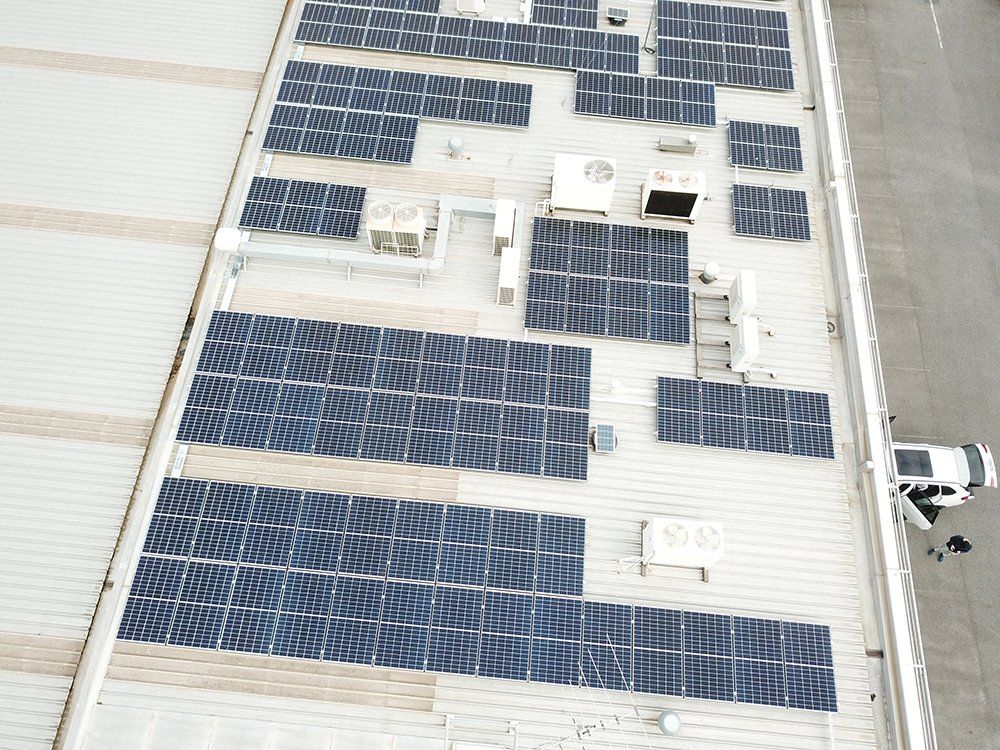
Many businesses have added commercial rooftop solar in recent years expecting to reduce their electricity bill across all categories. There’s no denying solar reduces energy consumption charges. Your net kWh consumed from the grid falls when your panels are generating. But solar has little effect on demand charges. In some cases, solar complicates the power factor further.
Here's why.
The Timing Problem
Demand charges are set by your peak demand reading during a defined measurement window. On most Australian networks, this is a 15 or 30 minute interval during weekday afternoon or evening periods (typically 3pm to 9pm for Ausgrid's capacity charge, for example).
Solar generation peaks at midday. By the time the afternoon demand window opens solar output is declining. Meanwhile, business activity is still high, HVAC is working hard against afternoon heat, and production equipment is running. The single highest demand reading that sets your demand charge is likely occurring at a time when your panels are contributing less than their peak.
This means a business that installs a 200 kW solar system may find that its monthly demand charge is almost unchanged, because the peak demand event that drives the charge happens when solar can't fully offset it.
Solar and power factor correction work well together. Solar reduces your energy consumption charges, power factor correction reduces your demand charges. A business that invests in both is addressing two separate cost drivers on the same bill, which is why many Quality Energy clients install both solutions as part of a broader energy efficiency strategy.
If you already have commercial solar and your demand charges haven't moved as much as you expected, power factor is likely the reason. A power quality audit will confirm whether that's the case and quantify the savings available.
For a broader look at how solar and other renewable energy systems interact with power quality at a site and grid level, see our article on
power quality issues in renewable energy systems.
How to Read Your Bill for Power Factor Issues: A Practical Checklist
Run through these steps with your most recent electricity bill in hand.
Step 1: Find your DNSP
Your distribution network service provider is listed on your bill - often in the network charges section or in the bill header. This tells you who owns the poles and wires and which tariff structure applies to your site. Knowing your DNSP is the starting point for understanding your demand charge structure.
Step 2: Look at your demand charge unit
Is your demand charged in kVA or kW? If kVA, your power factor is directly influencing this charge.
Step 3: Note your peak demand figure
What is your recorded maximum demand for the billing period, in kVA? This is the number your demand charge is calculated from.
Step 4: Look for a power factor reading
Some bills include it; most don't. If it's there, note it. If it's below 0.95, power factor correction should be on your agenda.
Step 5: Calculate the potential gap
If you have both a kW demand figure and a kVA demand figure, divide kW by kVA. That's your approximate power factor. The further it is from 1.0, the greater the savings opportunity.
Step 6: Check your demand measurement window
Some bills or tariff schedules note when peak demand is measured. Understanding whether your peak is set by a monthly maximum or a rolling 12-month maximum significantly affects how quickly you benefit from power factor correction. On networks with a 12-month rolling window (like CitiPower, Powercor, and Ausgrid), a single demand spike stays on your bill for a full year. On networks with a monthly reset (like Energex), the impact is more immediate but requires consistent management.
How Much Could You Save by Reducing Demand Charges?
The savings from power factor correction depend on three variables: your current power factor, your peak kVA demand, and your network's demand charge rate.
As a rough guide, businesses with a power factor below 0.85 and peak demand above 100 kVA will typically find a payback period of 12 to 24 months for a custom PFC installation. For sites with larger loads or poor power factor, payback can be shorter. We’ve built a handy power factor correction savings calculator which will give you an estimate.
For a concise figure, book a power quality analysis with us today. We’ll capture your real power factor, demand profile, and harmonic levels across all operating conditions. The audit report includes a precise savings calculation, a system specification, and a quote for custom-manufactured equipment. We’ll also credit you the cost of the audit when you proceed.
What Industries Are Most Affected?
Poor power factor is most common where inductive loads from motors, compressors, and transformers make up a significant portion of the electrical load. Industries that regularly carry kVA demand penalties include:
Manufacturing: Quality Energy's work with DAMOS Manufacturing in Queensland, for example, identified a power factor of 0.63 - resulting in over $8,500 per month in excess demand charges.
Food and beverage processing: Refrigeration compressors, processing equipment, and pumping systems all draw reactive power. Quality Energy has installed custom PFC equipment for Bulla Dairy Foods, Sugar Australia, and SunRice, with SunRice achieving savings of around $70,000 per year.
Commercial buildings and office towers: Large HVAC systems, lifts, and pumping systems in commercial buildings generate reactive power throughout the day. The University of Melbourne saw immediate increases in their electricity charges when CitiPower moved to kVA billing. A situation that power factor correction addressed.
Healthcare: Hospital facilities with 24-hour mechanical loads, sterilisation equipment, and imaging systems often have complex power factor profiles.
Agriculture: Irrigation pumps, grain handling equipment, and cold storage loads on farms and processing facilities carry reactive power that incurs penalties on networks that have moved to kVA billing.
Mining: Heavy variable loads from crushers, conveyors, and processing equipment create significant reactive power demand and are common candidates for PFC investment.
How PFC Equipment Reduces kVA Demand Charges
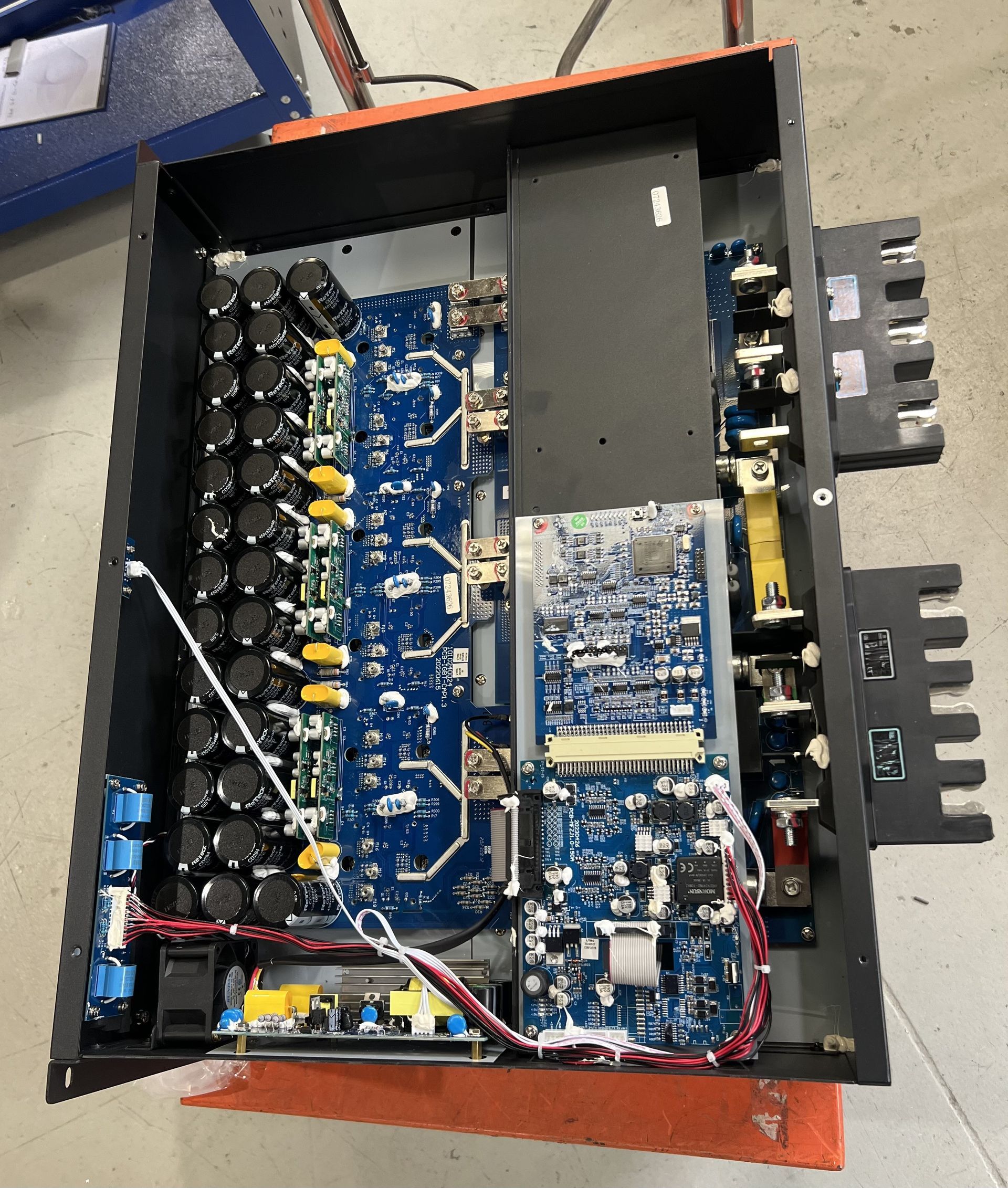
Power factor correction (PFC) equipment installs at your switchboard and generates reactive power locally, so your electrical equipment gets what it needs without the reactive current travelling from the grid. Your real power consumption stays the same. Your apparent power falls, as do the demand charges.
Quality Energy designs and manufactures PFC equipment in Australia, customised to each site's load profile. The process starts with a power quality audit to measure your actual power factor, load variability, and harmonic levels. The data determines the solution - whether that be our ECO or MOD PFC units, or more advanced solutions like a static var generator.
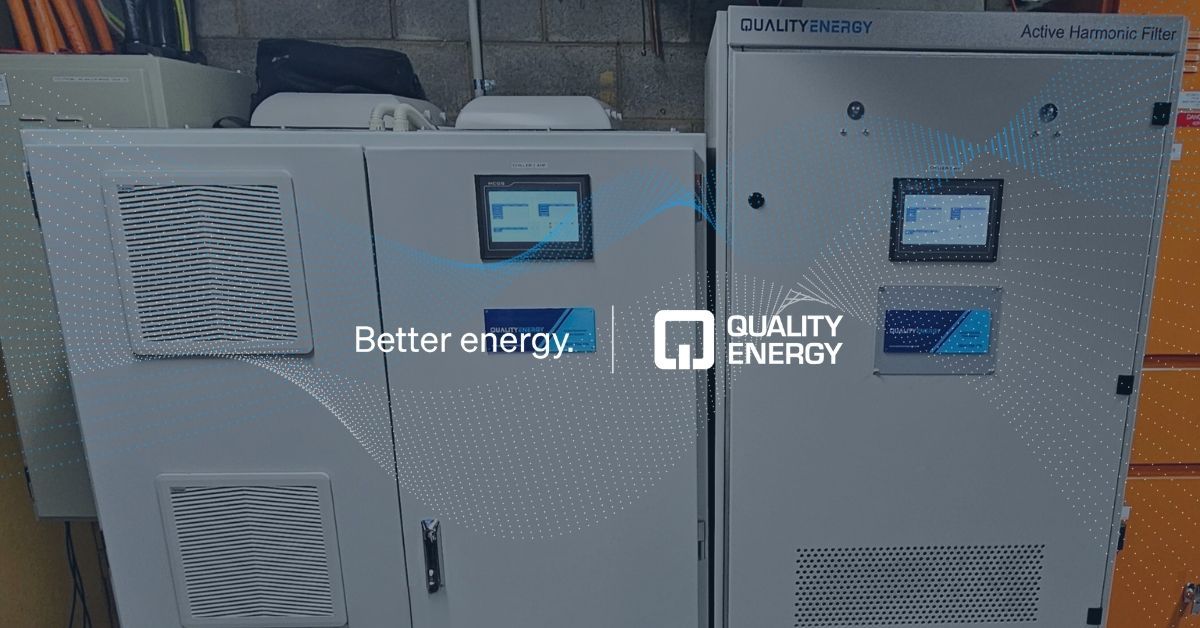
For sites with high harmonic distortion from variable frequency drives, UPS systems, or other non-linear loads, an active harmonic filter may be recommended alongside the PFC unit.
Quality Energy has been designing and manufacturing power quality solutions in Australia since 1989. Our equipment is built in Moorabbin, Victoria, custom-specified for the site it will be installed on, and backed by an Australian team.
Call
1800 736 374 or complete
our contact form to discuss your electricity bill and what's driving your charges.
Related news