How to Increase Electrical Capacity Without Upgrading Your Transformer
On This Page:
- Introduction
- Why your transformer reaches capacity sooner than you expect
- What a transformer upgrade really costs
- Our custom built equipment can avoid transformer upgrades
- Power factor correction units
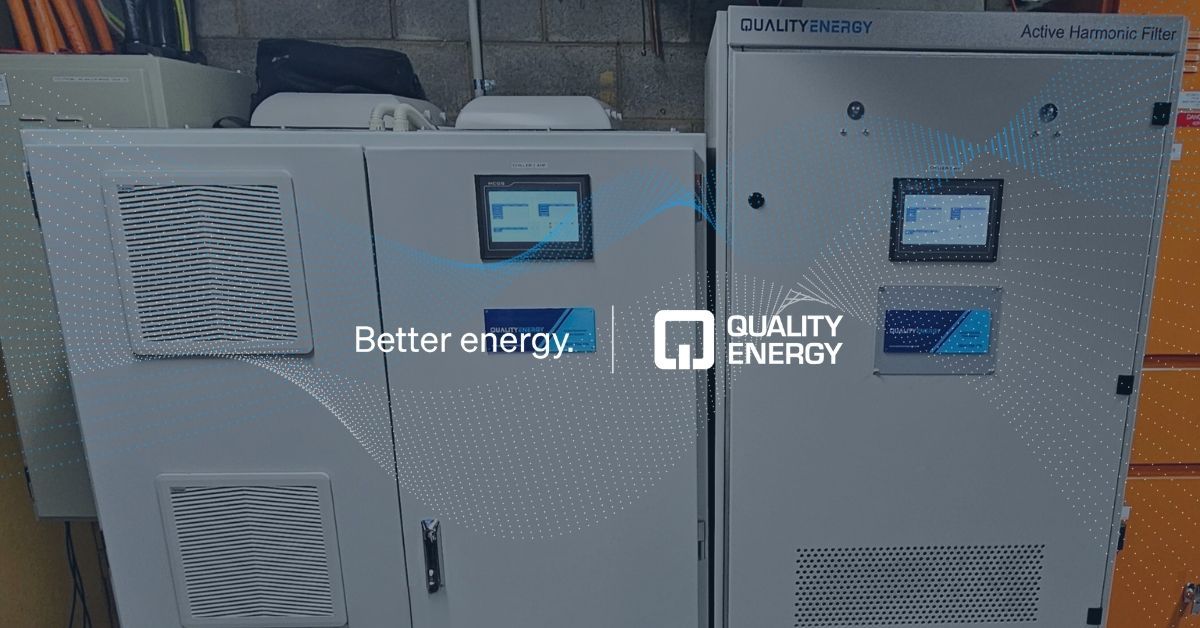
- Active harmonic filters
- Static VAR generators
- To find out what you need, start with a power quality audit
Free up the capacity already sitting in your electrical system.
Your business is growing. There is a new production line to commission, another machine to bring online, or a site expansion in progress. Then your electrician or network provider delivers the verdict: the transformer is at capacity.
Most businesses assume they need a transformer upgrade, only to discover it is a slow and expensive path. What many overlook is that the capacity they need is often already present in their existing electrical system, ready to be recovered.
Why your transformer reaches capacity sooner than you expect
A transformer is rated in kVA, its total capacity. Only part of that capacity does useful work powering your machines. That working portion is measured in kW, the real power.
The gap between the two is reactive power. Motors, drives, welders and other inductive loads draw it to build the magnetic fields they run on. Reactive power does no useful work, yet it still flows as current through your transformer and consumes capacity.
The ratio of useful power to total power is your power factor. A site running at a power factor of 0.75 is using only three quarters of its transformer for real work. The remainder is occupied by reactive current.
Lift the power factor and the same transformer delivers more usable power.
What a transformer upgrade really costs
Upgrading a transformer is rarely a single line on a budget. The transformer itself is the starting point. From there the work can extend to the service drop, the main switchboard, and the connection to the electrical grid.
Then there is your network provider. A larger supply often means a new connection agreement, revised supply contract, and a higher agreed maximum demand. Each step adds cost, paperwork and lead time, and production may need to pause while the work is carried out.
Recovering capacity from your existing system avoids most of this. The equipment sits behind your meter, on your side of the connection, under your control.
Our custom built equipment can avoid transformer upgrades
Below are the three technologies Quality Energy builds to order, and where each one performs best.
Power factor correction units
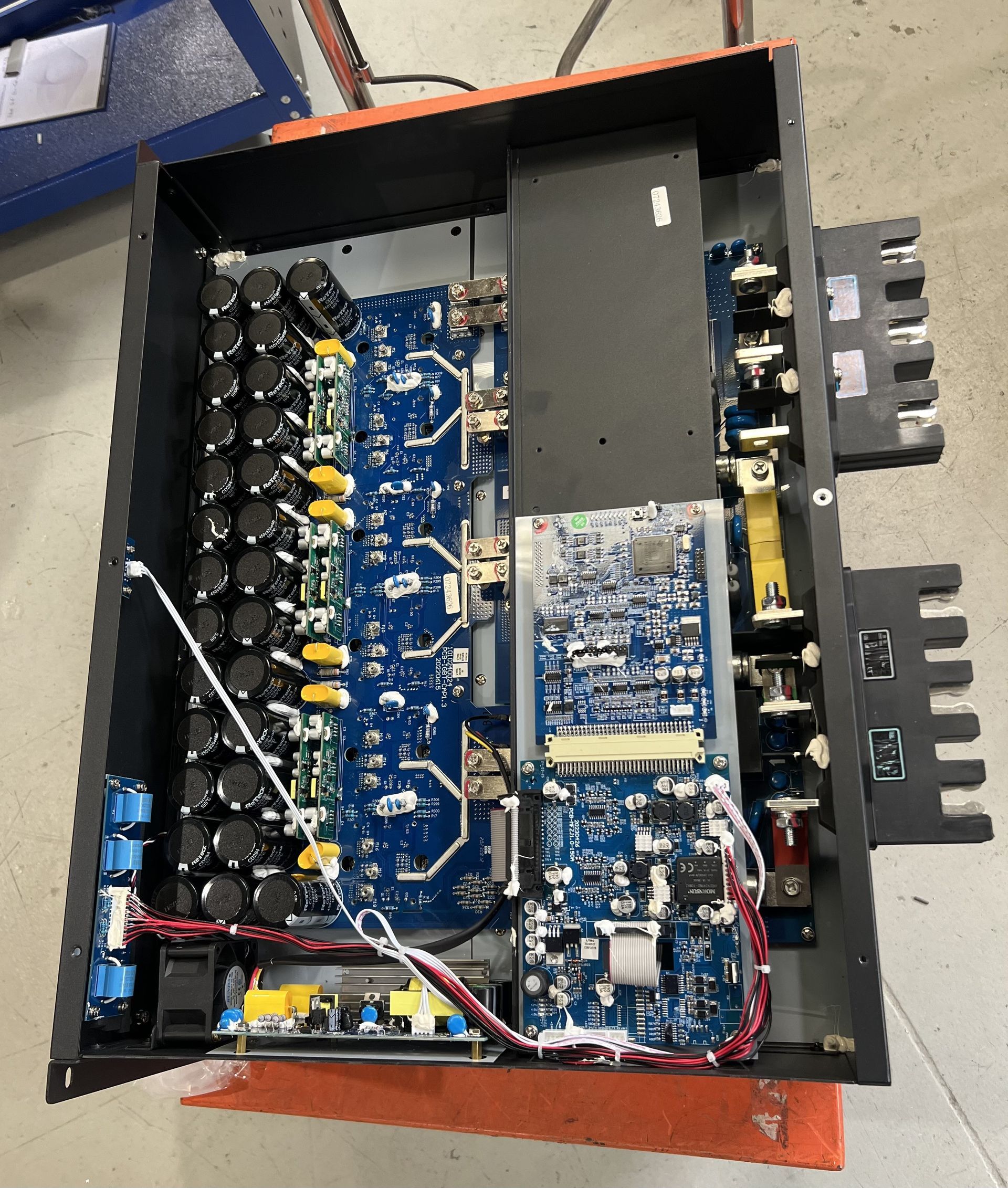
Power factor correction units are the foundation for sites with steady inductive loads: motors, pumps, compressors and fans. They supply reactive power locally so your transformer no longer has to carry it. Current draw drops, and usable capacity opens up.
The results at David Moss Corporation illustrate the scale of what this recovers. Faced with a transformer upgrade projected at over $350,000, the Geebung manufacturer turned to Quality Energy instead. Monitoring revealed a power factor of 0.63. Two bespoke units, one 900kVAr and one 800kVAr, lifted the site's power factor to 0.99. Current draw fell by more than 1,300 amps across the two switchboards. The site went on to install its new equipment with no transformer upgrade, and now saves over $8,500 per month in demand charges. The units paid for themselves in 18 months.
Austech Wire and Cable in Braeside shows the same approach on a tighter site. The cable manufacturer's automated machinery was running at a power factor of 0.88 and 0.89. The switchboard had no spare space, so Quality Energy enclosed the cabling, connected two units of 500kVAR and 200kVAR directly to the busbar, and matched the finish to the room. Both supplies now run at 0.99, with lower demand and better protection for the machinery.
Active harmonic filters
Variable speed drives, rectifiers, LED lighting and other electronic equipment draw current in sharp pulses rather than a smooth wave. These pulses are harmonics, and they distort the current flowing through your system.
Harmonics consume capacity in two ways. They add current that does no useful work, and they generate heat in your transformer. That excess heat stresses the winding insulation and accelerates ageing, which forces the transformer to be derated to a lower safe capacity.
Active harmonic filters measure the distortion in real time and inject an equal and opposite current to cancel it. The waveform is corrected, the transformer runs cooler, and the capacity lost to harmonics is restored. Sites with a high proportion of electronic loads benefit most, including manufacturing, mining, healthcare and water treatment facilities. Quality Energy has delivered active harmonic filter solutions across a range of these industries. View our
case studies here.
Static VAR generators
Some loads change rapidly. Welders, cranes, presses and large drives swing their demand in fractions of a second, and a standard correction unit may not respond fast enough. A static VAR generator responds in real time, correcting power factor moment to moment and holding voltage steady as loads shift.
A static VAR generator also suits sites where harmonic distortion rules out conventional capacitor-based correction. Motherson's manufacturing facility in Bendigo is a strong example.
The site carried widespread harmonic distortion across four separate main switchboards, where standard correction risked resonance with the high harmonic current present. Quality Energy engineered five static VAR generators across the four boards, delivering 1,600 kVAr of compensation sized to treat each area independently.
To find out what you need, start with a power quality audit
Every site is different, so every solution is built to suit. The first step is a power quality audit.
Quality Energy installs power quality monitors and measures how your site behaves under real load: your power factor, harmonic levels, and demand profile across the day.
The audit data tells our electrical engineers what to build. The result is power quality equipment designed to match your loads, switchboard and available space, rather than an off-the-shelf product.
If you are planning new machinery and have been told your transformer is full, a power quality audit will show you what is recoverable before you commit to an upgrade.
Talk to the team at Quality Energy about booking one. Call 1800 736 374 or get in touch.
Related news