How Much Do Commercial EV Charging Stations Cost in Australia?
On This Page:
- Introduction
- What Impacts the Cost of Commercial EV Charging?
- Understanding Your Carbon Footprint: Measurement and Reporting
- Fleet EV Charging
- Fleet Charging Takeaways
- Shopping Centres and Retail Precincts
- Office Buildings and Business Parks
- Schools, Universities and Public Institutions
- Don’t Forget About Engineering and Compliance Essentials
- Commercial EV Charger Manufacturers in Australia
- Quality Energy’s Partnerships
- Why Commercial Chargers Cost More Than Home Setups
- Now You Know How Much Commercial EV Charging Stations Cost in Australia
The transition to electric vehicles (EVs) is well underway in Australia, and businesses across the country are beginning to view EV charging as an essential service. Whether you’re running a shopping centre, managing a fleet, or planning infrastructure for schools and offices, commercial EV charging stations can improve customer experience, boost sustainability credentials, and open up new revenue opportunities.
But what does it cost to install commercial EV chargers? Let’s break it down.
What Impacts the Cost of Commercial EV Charging?
The total cost of installing commercial EV charging stations depends on:
Hardware costs
- Level 2 chargers (AC, 7 to 22kW): $2,000 - $7,000 per unit.
- DC fast chargers (50 to 350kW): $30,000 - $150,000+ per unit.
Installation costs
- Site works, trenching, cabling, and switchboard upgrades.
- Melbourne businesses typically spend $5,000 - $50,000 per site, depending on scale and complexity.
Ongoing costs
- Electricity tariffs (peak vs. off-peak).
- Maintenance, software subscriptions, and network fees if you provide charging as a service.
Understanding Your Carbon Footprint: Measurement and Reporting
From fleet depots to universities and shopping centres, Quality Energy has installed commercial EV chargers nationwide. Here are some real project examples with indicative costs. Explore our
latest case studies here.
Fleet EV Charging
Fleet electrification is one of the fastest-growing use cases for commercial EV charging in Australia. Whether it’s councils, logistics companies, or global retailers, each organisation requires a tailored approach depending on fleet size, operating hours, and sustainability goals.
Quality Energy has installed fleet electric vehicle chargers for Ikea, Sutherland Shire Council, and Western Program Alliance. Here is a breakdown of the systems and approximate cost:
- Ikea: 4 x 22kW AC three phase chargers to charge delivery vehicles including light trucks. Chargers installed at loading bays so vehicles can charge whilst being prepped for deliveries.
- Sutherland Shire Council: 2 x 22kW AC chargers to support daily fleet operations.
- Western Program Alliance: Wall mounted 25kW DC charger for quick charging of pool vehicles without straining electrical infrastructure.
Fleet Charging Takeaways
- Small to medium fleets: Medium-output DC chargers (20-30kW) are effective where charging speed is important but infrastructure upgrades need to be limited.
- Large logistics and retail fleets: Scalable AC solutions (22kW three-phase) are often the most practical for day-to-day use, especially when charging can overlap with operational downtime.
- Government and councils:
Dual AC chargers (22kW) are common, supporting gradual electrification while staying within budget and sustainability mandates.
Shopping Centres and Retail Precincts
Shopping centres are one of the fastest-growing locations for EV charging installations. They serve two clear purposes:
- Customer convenience - giving shoppers the ability to charge while they shop.
- Revenue generation - offering pay-per-use charging as an additional income stream.
Traditionally, Level 2 chargers (11–22kW) have been the most common choice for retail sites, as they suit the average shopping trip of 1–3 hours. However, more retail centres are now investing in DC fast chargers (50–150kW+) to support higher turnover and capture additional revenue.
Quality Energy installed 120kW ABB Terra124 DC fast chargers at two shopping centres in the suburbs of Adelaide, each capable of charging two EVs simultaneously.
Office Buildings and Business Parks
Office buildings are increasingly offering EV charging as a staff benefit, a sustainability initiative, and a way to future-proof their facilities. For most workplaces, Level 2 chargers (11-22kW AC) are the most practical choice, since staff typically park for several hours each day. These chargers provide reliable charging without overwhelming building electrical capacity.
However, installing EV chargers in high-rise or shared office towers can be more complex than in stand-alone facilities. Challenges often include:
- Obtaining approval from building managers and strata committees.
- Ensuring existing switchboards and cabling can handle the additional electrical load.
- Scheduling works to minimise disruption to tenants and traffic flows.
- Integrating with building safety systems such as fire panels.
Office installations often involve complex electrical integration and stakeholder coordination, but the result is a practical staff amenity and a sustainability win. Quality Energy has installed 3 x AC 22kW EVBox BusinessLine chargers in a Southbank office complex ground floor carpark (multi-tenancy building), connected to ChargeHub software.
Schools, Universities and Public Institutions
Education facilities and public institutions are increasingly adopting EV charging infrastructure to support staff, students, and the broader community. These installations are usually tied to long-term sustainability plans and government targets, making them both practical and symbolic investments.
In most cases, institutions install a mix of Level 2 AC chargers (11-22kW) for everyday use and DC fast chargers (50kW+) to serve higher-demand users. This balance provides cost-effective charging while also ensuring fast turnaround options for fleet and public users.
Quality Energy installed a total of 12 charging stations across two campuses for Federation University, Ballarat. These were a combination of 22kW socket chargers and a 50kW dual charger.
Don’t Forget About Engineering and Compliance Essentials
Installing EV chargers isn’t just about choosing hardware. Businesses must navigate:
- Electrical compliance: Installations must meet AS 3000 (wiring rules) and AS/NZS 4777.1 (grid connection).
- Site assessments: A licensed electrician must evaluate load capacity and grid constraints.
- Permits and planning: Local councils may require development approval for upgrades to commercial car parks.
- Energy integration: Pairing EV chargers with
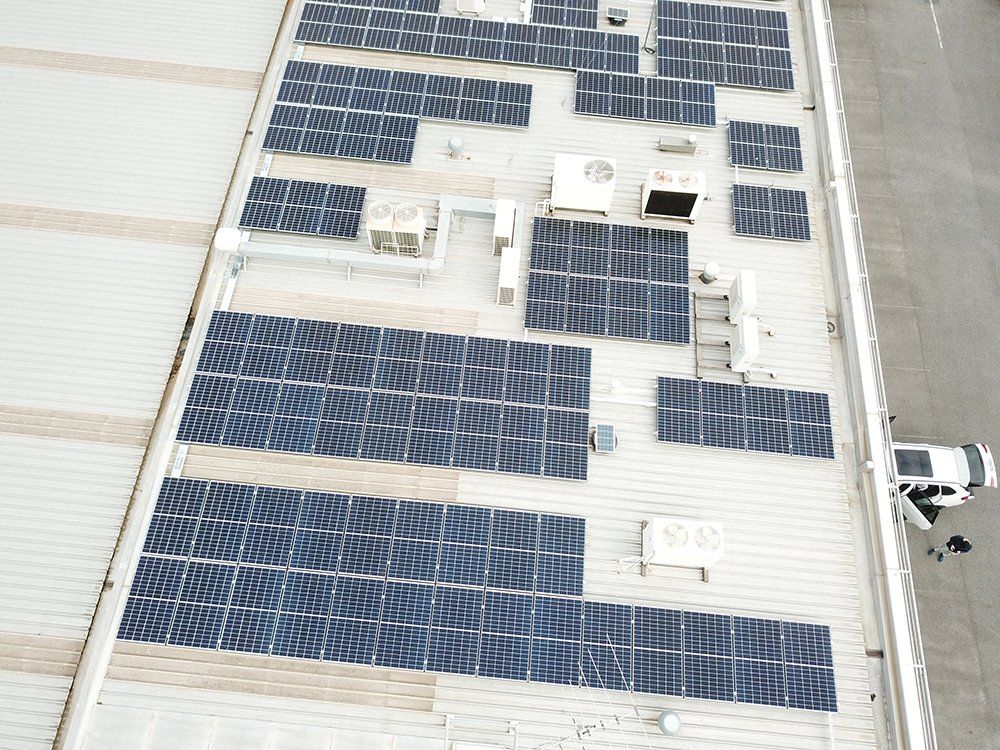
rooftop solar and
battery storage is increasingly common. This can significantly reduce operating costs and align with Melbourne’s sustainability standards.
Commercial EV Charger Manufacturers in Australia
The Australian EV charging market includes a mix of local innovators, global technology leaders, and trusted installation partners. In Melbourne and across Australia, some of the key players include:
- Tritium (Australia-based): Specialises in DC fast chargers, widely used across public networks.
- JET Charge (Melbourne): Leading installer and technology provider, active in workplace and fleet charging.
- EVSE Australia: Focused on workplace and retail charging solutions with a strong presence in the commercial sector.
- Global brands: ABB, Schneider Electric, and Delta all supply commercial-grade AC and DC chargers in Australia.
Quality Energy’s Partnerships
Quality Energy enhances its offering by partnering with several leading suppliers and networks to deliver tailored solutions:
- ChargeFox: Australia’s largest EV charging network, providing access to nationwide charging software and services.
- ChargeHub: A smart EV charging software platform that enables load management, billing, and fleet integration.
- NHP: A trusted electrical engineering partner supplying high-quality switchgear and electrical components.
- EnergyAustralia: Collaboration on large-scale sustainability and EV charging infrastructure projects, including university and commercial site deployments.
By working with both global manufacturers and local partners,
Quality Energy is able to design and deliver EV charging systems that combine durable hardware with advanced software, ensuring reliability and future scalability.
Why Commercial Chargers Cost More Than Home Setups
It’s important to remember that commercial EV charging is a different world compared to what you’d typically see at home. At home, most drivers get by with a charger in the 7-11kW range, which usually costs around $1,500 to $3,000 installed. Perfect for overnight charging in a driveway or garage.
In commercial settings, things step up a notch. Businesses often need 22kW Level 2 chargers, which can support multiple users throughout the day. These come in at around $5,000 to $10,000 installed, thanks to stricter compliance requirements and heavier electrical loads.
Then there’s fast charging, the kind you’ll see at shopping centres, fleet depots, or public networks. These DC chargers start at 50kW and go up to 350kW, with prices starting from $50,000. They’re almost never installed at homes because of their size, power draw, and cost.
Now You Know How Much Commercial EV Charging Stations Cost in Australia
Commercial EV charging isn’t one-size-fits-all. The right solution depends on your site, your customers, and your long-term goals. From affordable AC chargers for offices to high-powered DC fast chargers for shopping centres and fleets, the investment can range from a few thousand dollars to well over $100,000.
What matters most is choosing a partner who can design and deliver a system that works for your business today and scales for tomorrow.
Ready to explore your options?
Get in touch with Quality Energy for a no-obligation quote on your commercial EV charger installation, no matter where you’re located in Australia.
Related news