100kW Commercial Solar System: A Guide for Australian Businesses
On This Page:
- Introduction
- How Big Is a 100kW Solar Power System?
- How Much Power Does a 100kW Commercial Solar System Produce?
- How Much Does a 100kW Solar System Cost in Australia?
- Read Our Case Study: 99.9kW Solar System Projected to Save $491,151
- What the 2026 SRES Expansion Means for Systems Over 100kW
- The Roof Area Needed for a 100kW Solar System
- Pairing a 100kW Solar System With Battery Storage
- Benefits of a 100kW Solar PV System
- Lower Electricity Purchases
- Greater Energy Cost Certainty
- Access to Renewable Energy Certificates
- Lower Operational Emissions
- Support for New Electrical Loads
- How to Protect the Return From a 100kW Solar System
- Quality Energy Is a New Energy Tech Approved Seller
- Is a 100kW Solar System Right for Your Business?
A 100kW commercial solar system can reduce daytime grid electricity use for warehouses, manufacturers, schools, service stations, cold storage facilities and other energy-intensive sites.
The right result depends on more than panel capacity. Electricity demand, roof conditions, network requirements and the proportion of solar used onsite all affect the system's financial return.
There is also an important incentive threshold to consider. Under the current Small-scale Renewable Energy Scheme (SRES), an eligible solar installation rated at no more than 100kW can create small-scale technology certificates (STCs). Many commercial systems are designed at 99.9kW to remain safely within this limit. From 1 October 2026, the Australian Government intends to extend SRES support to eligible solar systems above 100kW and up to 1MW.
This guide explains the size, output, cost and site requirements of a 100kW solar system, along with what the proposed 2026 SRES expansion could mean for businesses that need a larger installation.
How Big Is a 100kW Solar Power System?
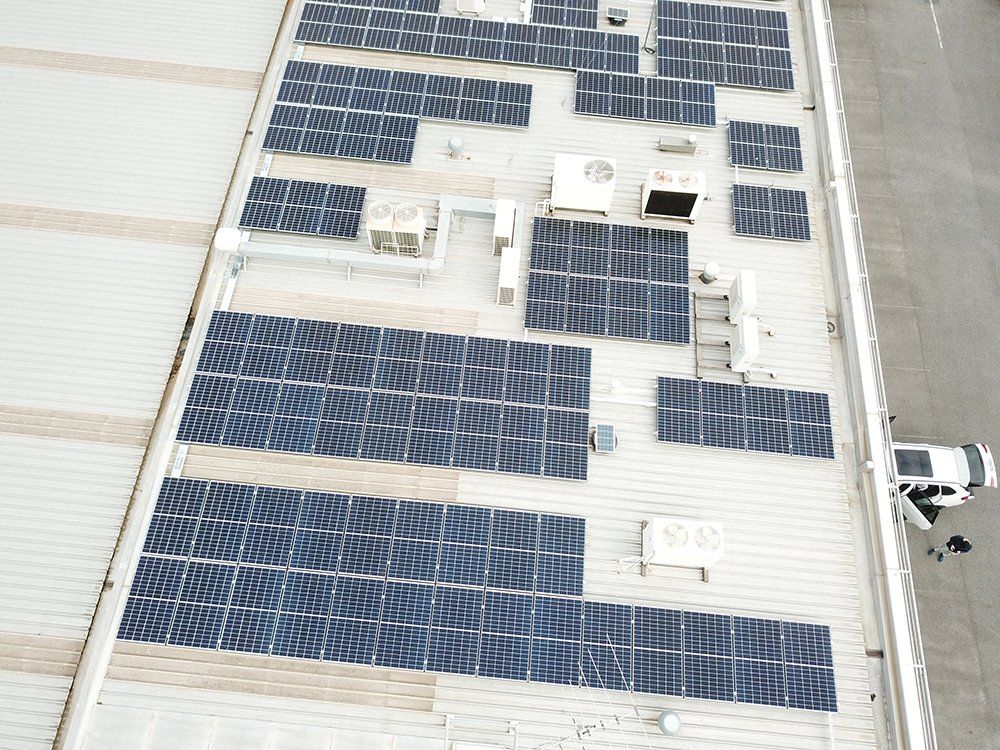
A 100kW solar system is a substantial commercial installation. It is commonly considered by businesses with high daytime electricity use and enough roof or ground space to accommodate a large solar array.
The number of panels depends on the wattage of the selected modules. A system close to 100kW may use approximately:
- 180 x 550W panels for 99.0kW
- 227 x 440W panels for 99.88kW
- 270 x 370W panels for 99.9kW
- 363 x 275W panels for 99.825kW
Newer, higher-wattage panels can produce the required capacity with fewer modules. Panel dimensions, roof layout, access pathways, fire-safety clearances, shading and existing rooftop equipment determine how much of the available space can be used.
Quality Energy assesses the site before recommending a system size. The goal is to match solar production with the property's electricity demand, rather than filling every available section of roof without considering how the energy will be used.
How Much Power Does a 100kW Commercial Solar System Produce?
A well-designed 100kW commercial solar system may generate approximately 120,000 to 160,000kWh of electricity annually. This equates to an annual daily average of about 330 to 440kWh, although production will be higher on clear summer days and lower during winter or poor weather.
Actual output depends on:
- the site's location and solar irradiance
- panel orientation and tilt
- shading from trees, buildings and rooftop equipment
- module and inverter selection
- system temperature and electrical losses
- soiling, maintenance and equipment availability.
Locations with stronger solar resources, including locations in Queensland, South Australia and Western Australia, may produce more electricity than comparable systems in southern regions. Site-specific modelling is still required because two roofs in the same postcode can perform differently.
The financial value of the system depends heavily on self-consumption. Electricity used by the business while the system is generating replaces power purchased at the site's retail rate. Electricity exported to the grid receives a lower commercial export rate, or exports may be restricted under the network connection agreement. This is where adding a solar battery can be beneficial, particularly for businesses in NSW. Read our post on changes to commercial battery rebates in NSW to learn more.
How Much Does a 100kW Solar System Cost in Australia?
An indicative planning range for a 100kW commercial solar installation is $90,000 to $140,000. A current site assessment is needed before relying on this range because commercial projects can vary considerably.
The final price may be affected by:
- panel, inverter, mounting and monitoring specifications
- roof type, height and structural work
- switchboard and protection upgrades
- site-access requirements
- network studies, export controls and connection work
- cable routes and equipment locations
- operating-hour or staged-installation requirements
- battery storage or EV charging integration
Payback periods also vary. Some
Quality Energy projects have modelled payback periods between four and six years, but other sites may take longer. The strongest returns usually occur where the business can use a high proportion of the solar electricity while it is being generated.
Read Our Case Study: 99.9kW Solar System Projected to Save $491,151
Budget Petrol in Goulburn planned to install EV chargers, but the site's grid supply presented a challenge. The additional charger demand could have increased tariff costs and affected charger performance.
After an onsite assessment and analysis of the site's energy data, Quality Energy recommended supplementing the grid supply with rooftop solar. The team designed and installed a 99.9kW solar system with a special-order FIMER PVS-100 string inverter compatible with the DC EV chargers.
The 99.9kW capacity kept the project safely within the SRES limit that applied when the system was designed. The project modelling estimated:
- 25-year financial benefit: $491,151
- Estimated payback period: 5.8 years
- Estimated emissions avoided: 145.5 tonnes of CO2 annually
- Solar output warranty: 30 years
These figures are project-specific forecasts rather than standard results for every 100kW system. The business's load profile, electricity tariff, site conditions, system cost and export arrangements all influenced the outcome.
Quality Energy looks beyond the solar array when assessing a commercial site. As a manufacturer and supplier of power quality equipment, we can examine solar alongside your existing power quality, including any demand charges, or proposed
impact of renewable energy to power quality.
What the 2026 SRES Expansion Means for Systems Over 100kW
The Small-scale Renewable Energy Scheme creates STCs for eligible solar installations, which are exchanged for an upfront reduction in the purchase price.
For systems installed in 2026, the standard solar STC calculation uses a five-year deeming period. The ordinary deeming period then falls to four years in 2027, three in 2028, two in 2029 and one in 2030.
On 5 August 2026, the Australian Government announced plans to expand the SRES to mid-scale solar PV. The change is intended to make systems above 100kW and no more than 1MW eligible to create STCs from 1 October 2026, estimated to reduce upfront costs by around 20%. Our post on the SRES expansion changes explains this further.
The Roof Area Needed for a 100kW Solar System
A 100kW system requires around 500 to 650 square metres of usable roof area. The amount depends on the number and dimensions of the panels, their orientation, the mounting system and the clearances required around roof edges, access routes, vents and other equipment.
Usable roof area matters more than total roof area. Quality Energy assesses:
- structural condition and load capacity
- roof pitch, orientation and shading
- skylights, vents, HVAC equipment and other obstructions
- access and installation requirements
- fire and maintenance pathways
- heritage, planning and council requirements where applicable
Some sites can support a larger system than first expected, while others need a smaller array or additional engineering work. A roof plan and structural assessment provide a more reliable answer than estimating capacity from building dimensions alone.
Pairing a 100kW Solar System With Battery Storage
A 100kW solar system can be paired with commercial battery storage during the initial installation or added later.
A well-designed battery can extend the value of a 100kW solar system by storing excess daytime generation for use later. It can help reduce peak demand, increase solar self-consumption and support selected equipment during a power outage.
Quality Energy uses interval data, solar production, demand peaks and operating hours to recommend a battery capacity suited to the business. The battery, inverter, switchboard and backup circuits can then be configured around priorities such as evening energy use, essential equipment, EV charging and future electrical demand.
Benefits of a 100kW Solar PV System
Lower Electricity Purchases
Solar used onsite reduces the amount of electricity bought from the grid during daylight hours. Savings depend on the site's tariff and the proportion of generation consumed by the business.
Greater Energy Cost Certainty
Onsite generation can reduce exposure to future retail electricity price movements. It does not eliminate the bill because network charges, demand charges, fixed fees and electricity used outside solar-production hours may remain.
Access to Renewable Energy Certificates
Eligible systems rated at no more than 100kW may receive an upfront STC discount. From the intended October 1 commencement of the 2026 expansion, eligible systems above 100kW and up to 1MW may also qualify.
Lower Operational Emissions
Solar generates electricity without direct operational greenhouse gas emissions. Businesses can use verified production data to support internal energy and emissions reporting, subject to the accounting method they apply and any treatment of renewable energy certificates.
Support for New Electrical Loads
Solar can form part of a wider energy plan that includes EV charging, equipment electrification, battery storage and power quality management. These loads should be modelled together so the electrical infrastructure and generation capacity work as intended.
How to Protect the Return From a 100kW Solar System
Good performance starts with a design based on the site's interval electricity data. Once installed, the system should be monitored so faults, inverter outages and unexpected drops in production can be investigated promptly.
Cleaning requirements depend on rainfall, dust, bird activity, roof pitch and the site's operating environment. Panels should be inspected and cleaned when condition or performance data indicates it is needed, following manufacturer instructions and safe-access procedures.
Businesses can also improve self-consumption by scheduling suitable loads during solar-production hours. The opportunity depends on operating requirements and should not interfere with production, safety or equipment performance.
Quality Energy Is a New Energy Tech Approved Seller
Choosing a New Energy Tech Consumer Code (NETCC) Approved Seller gives you added confidence when investing in commercial solar, battery storage or EV charging. Quality Energy has demonstrated that its sales practices, quotes, contracts, installation processes, warranty support and complaints procedures meet the NETCC’s consumer protection standards.
For your business, this means clearer information about costs and expected performance, fair contract terms and support after the system is installed. On a commercial solar project involving a substantial capital investment, these standards make it easier to compare proposals and understand who is responsible for the design, installation, warranties and any issues that may arise.
A commercial solar project follows these stages:
- Energy and site assessment: We review interval data, electricity bills, tariffs, operating patterns, switchboards, roof conditions and future energy plans.
- Preliminary design: We model a suitable system capacity, expected production, self-consumption, energy savings and emissions reduction.
- Network application: The proposed system is submitted for the required distributor assessment and connection approval.
- Detailed design and proposal: The system design, equipment, project scope, costs, certificate assumptions and financing options are confirmed.
- Planning and engineering: Structural, electrical, access and planning requirements are addressed before installation.
- Installation: SAA-accredited installers and licensed electricians complete the approved work.
- Commissioning and metering: The system is tested, commissioned and connected with the required monitoring and metering arrangements.
- Performance review: Monitoring helps confirm production and identify performance issues after handover.
Is a 100kW Solar System Right for Your Business?
A 100kW system may suit a business with substantial daytime electricity use, suitable roof space and a grid connection that can accommodate the installation. It should not be treated as a standard package for every commercial property.
For some sites, 60kW may produce a better return. Others may be able to use 250kW, 500kW or close to 1MW, particularly if the business is adding EV charging, electrical equipment or battery storage. The proposed SRES expansion may improve the upfront cost of these larger projects, but the system still needs to be designed around the site's demand and connection limits.
Get a commercial solar feasibility study with Quality Energy before committing to a system size. We can assess your interval data, tariffs, roof, network requirements and future loads, then prepare a business case based on the capacity your operation can use.
Related news